
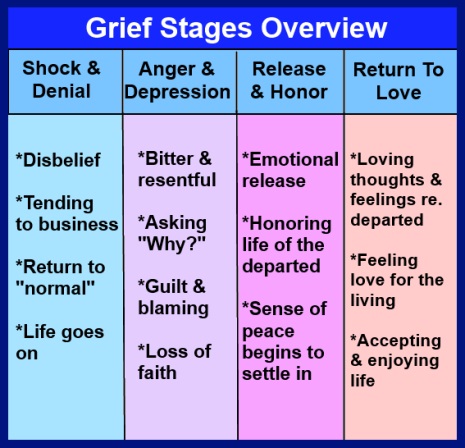
Everyone suffers loss in different ways depending upon their beliefs, culture, family history, and relationship with the person who died. It doesn't mean that others care less if they mourn differently than you do. Grief can also vary greatly depending upon how the child died. While some losses are less visible, such as miscarriage, other experiences of loss are more traumatic, such as an accident, illness, murder or death during war.
How Can I Help Myself?
- Keep a journal; sometimes it is helpful to put down in words what you are feeling and thinking.
- Talk about your child, if you want to. Although it may be painful, it can help you heal.
- Take time to do a familiar activity with your family. This helps to provide stability when your world is feeling chaotic.
- Join a support group; parents often respond that becoming involved in bereavement groups helped them through their loss and with their relationship.
- Seek therapy when you, or others close to you, feel that your grief is becoming too difficult to bear, or is too prolonged.
What Types of Help Are Available?
- Family Therapy: The death of a child touches everyone in the family and forever changes its landscape. Sadness, anger, and hopelessness are some of the emotions often felt by bereaved parents. Family therapists are specially trained to understand the profound impact of this loss on an individual and a family and can assist through a time of bereavement.
- Support Groups: Support groups for bereaved parents offer a place to talk about your child, your loss, fears, anger, anxieties and other feelings. These groups also help parents learn from the experiences of others who have suffered the same or a similar type of loss. Several support groups provide services for other family members, such as siblings and grandparents. Contact one of the organizations listed below for information about group support in your area.
Resources
- Bereaved Parents of the U.S.A. A self-help group that offers support, understanding, compassion and hope to bereaved parents, grandparents and siblings.
- Candlelighters Childhood Cancer Foundation: Founded by parents of children with cancer, this group offers support to parents who have a child diagnosed with cancer and those whose child has died of cancer.
- Compassionate Friends: An organization for bereaved parents, assisting families following the death of a child.
- First Candle/SIDS Alliance: Support for families who have experienced miscarriage, stillbirth or sudden death of an infant.
- Mothers Against Drunk Driving (MADD)
- National Center for Missing and Exploited Children
- The National Hospice and Palliative Care Organization: An organization representing palliative care and hospice programs and professionals in the U.S., committed to improving end-of-life care and increasing access to hospice care.
- National Organization of Parents of Murdered Children
- Birth Injury Guide


 Posts
Posts


No comments:
Post a Comment